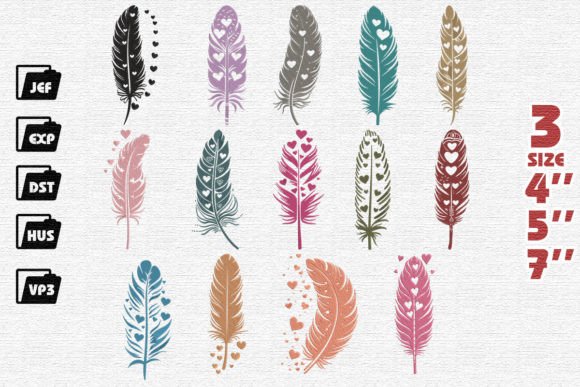
Set of 14 Feathers: A Designer’s Review
As an embroidery designer who has spent years digitizing files for small businesses, I approach every new machine embroidery design with a critical eye. It is not just about whether the artwork looks pretty on a screen; it is about how it performs under the needle, how it translates to fabric, and ultimately, how it serves the brand identity of the client using it. Recently, I reviewed the Set of 14 Feathers, a collection that promises to add a touch of charm to fabrics. For small business owners, Etsy sellers, and apparel decorators, this review breaks down the practical viability of these designs for commercial use.
First Impressions: Visual Personality and Brand Fit
The initial appeal of the Set of 14 Feathers lies in its versatility. The description highlights a "fun and whimsical accent," which immediately suggests a playful yet rustic aesthetic. In the world of Boho style, feathers are a staple motif, but they can easily look cliché if not executed with precision. These designs appear to balance elegance with a handmade feel, making them suitable for brands that want to project warmth and creativity.
For a boutique florist, a creative studio, or a local bakery, this set offers a visual language that is friendly and approachable. Unlike rigid corporate logos, these feather motifs feel organic. They work exceptionally well for businesses that rely on customer trust and personal connection. When I visualize these on a tote bag or an apron, they do not scream for attention; rather, they invite closer inspection, which is exactly what you want for high-quality small business merch.
Real-World Applications for Small Business Merchandise
The true test of any digital embroidery file is its application across various products. Here is how I see the Set of 14 Feathers performing in real commercial scenarios:
- Embroidered Patches: This is perhaps the strongest use case. A single feather from the set can be stitched onto a twill backing to create a custom patch. These can be sold as standalone accessories or used to brand employee uniforms without permanently altering the garment.
- Apron Embroidery: For cafes and bakeries, staff aprons are walking billboards. Placing a small feather motif on the chest pocket adds a subtle branding element that feels premium rather than promotional.
- Cap Embroidery: Caps require designs that are simple and bold. Selecting the most streamlined feather from the set ensures clarity on the curved surface of a cap front, avoiding the clutter that often plagues detailed Embroidery work on headwear.
- Tote Bag Design: Canvas totes benefit from larger, more detailed stitches. Using a cluster of two or three feathers from the set can create a balanced composition on the side or center of a bag, appealing to customers looking for eco-friendly, stylish carryalls.
- Product Packaging Accents: Beyond apparel, these designs can be stitched onto fabric tags attached to handmade products, enhancing the unboxing experience and reinforcing the handmade product narrative.
Technical Considerations and Stitch Performance
While the aesthetic is promising, technical execution is where many designs fail. As a designer, I always advise checking specific technical details before running a production batch. The product description notes that the design comes in a format suitable for t-shirts and towels, but it does not specify exact stitch counts or hoop sizes. Therefore, you must verify these details in the included documentation.
Stitch density is a critical factor. Feathers often involve fine lines and tapered ends. If the density is too high, the thread may bunch up, causing puckering on lightweight fabrics like t-shirt jersey. If it is too low, the fabric may show through, ruining the finished look. I recommend testing the design on a scrap piece of your actual production fabric. Use the appropriate stabilizer—cut-away for stretchy knits and tear-away for stable wovens—to ensure the design holds its shape.
Another consideration is thread colors. Feathers look best when there is subtle variation. However, for branded merchandise, you may need to match specific company colors. Test the design in monochrome first. If the design relies heavily on color blending to define its shape, it may lose definition when stitched in a single color. Ensure the outline and fill stitches are distinct enough to maintain clarity.
Where to Use Caution
Not every item is suitable for every design. With the Set of 14 Feathers, exercise caution in the following areas:
- Tiny Lettering or Complex Details: If a feather design includes intricate inner detailing, avoid stitching it at very small sizes. The needle may not have enough room to form the stitches properly, leading to thread breaks or a muddy appearance.
- Textured Fabric: Highly textured fabrics like thick wool or terry cloth towels can swallow fine stitches. For towels, choose the bolder, simpler feather designs from the set to ensure visibility.
- Frequent Washing: Items like staff uniforms undergo rigorous washing cycles. Ensure the design is securely anchored with proper underlay stitches. Poorly digitized edges may fray over time, damaging the professional image of your custom apparel.
- Dark Uniforms: If stitching on dark fabrics, ensure you have high-contrast thread colors. A subtle beige feather on a navy shirt may disappear. Consider adding a satin stitch border to make the design pop.
Enhancing Brand Identity and Customer Trust
Consistency is key to building brand recognition. Using a cohesive set like Set of 14 Feathers allows you to create a family of products that look related but not identical. You might use one feather style on hats, another on tote bags, and a third on aprons. This visual consistency signals professionalism and attention to detail.
When customers see high-quality commercial embroidery on your merchandise, it elevates the perceived value of your brand. It suggests that you care about the tactile experience of your products. For Etsy sellers and crafters, this can be the difference between a one-time buyer and a loyal customer. A well-executed embroidered item feels luxurious and durable, encouraging buyers to engage more deeply with your brand.
Practical Designer Notes for Production
Before you commit to a large run of design assets, follow these steps:
- Create a Printable Mockup: Use software to place the design on a photo of your actual product. This helps clients visualize the scale and placement before you stitch a single thread.
- Check Commercial Licensing: Always confirm that the license included with the embroidery file permits commercial use. Some designers restrict the number of items you can sell or require attribution.
- Test Hoop Size Compatibility: Ensure the design fits within your machine’s hoop size without requiring re-hooping, which can lead to alignment issues.
- Compare Beside Other Assets: Lay the stitched sample next to your logo and other branding elements. Does it complement them, or does it clash? The goal is harmony.
In conclusion, the Set of 14 Feathers offers a charming and versatile option for small businesses looking to add a whimsical yet professional touch to their merchandise. By paying attention to technical details like stabilizer choice, thread contrast, and fabric texture, you can transform these digital files into high-value physical products that enhance your brand identity and delight your customers.